
Tanzania: A Slow Safari Journey
Duration
4 hours
Max People
50
Min Age
2+
Pickup
Airpot
Most safaris try to show you too much.
This one understands that depth beats breadth. Always.
Tanzania’s northern circuit—the Serengeti, Ngorongoro, Tarangire—contains some of Earth’s most extraordinary wildlife concentrations. But here’s the thing: You can’t “do” the Serengeti in two days. You can’t understand Ngorongoro’s crater ecosystem in an afternoon. You certainly can’t grasp the migration’s scale from a rushed morning drive.
Read More ↓
This journey is designed for travelers who value immersion over checklist completion. Who’d rather spend four days in the Serengeti—learning its zones, following its stories, moving with animal patterns—than race through six parks in a week.
Over eight to twelve days (you’ll know which feels right), you’ll go deeper into fewer places. You’ll return to the same waterhole at different times, seeing how the cast of characters shifts. You’ll track a pride over multiple days, understanding their territory and tactics. You’ll have time to simply sit—something surprisingly rare in safari culture—and let the landscape reveal itself at its own pace.
Your lodges are chosen for location first, luxury second. This means tents in the path of the migration. Camps overlooking game-rich valleys. Locations where you can watch wildlife from your private deck rather than driving for hours to find it.
And here’s the gift: unhurried time. No 5am wake-up if you’re exhausted. No “we must leave now” if something fascinating is unfolding. This safari bends around you and the wild’s actual rhythms, not some operator’s schedule.
Because Tanzania deserves your full attention. And attention requires time.
Experience Highlights
Extended Immersion
Four to five-night stays letting you genuinely know a place—its personality, its patterns, its morning versus evening mood.
Wildlife as Narrative
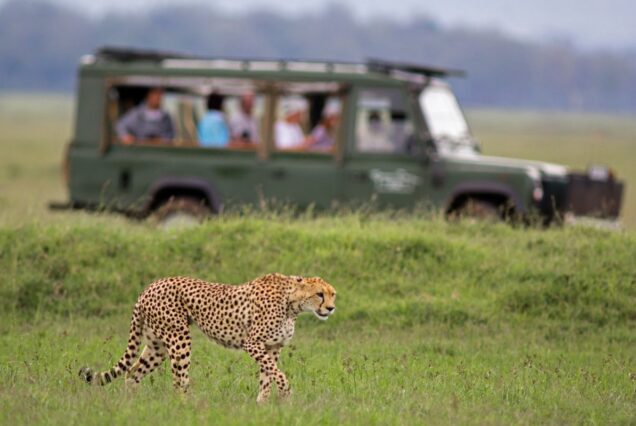
Private guiding that follows stories over days, not just sightings—understanding pride dynamics, migration movements, predator-prey relationships.
Location, Location, Location
Camps positioned where game comes to you—in migration corridors, overlooking waterholes, within private concessions.
Flexible Pacing
Morning drives that stretch as long as the action demands; afternoons free for rest, reflection, or optional bush walks.
Stillness as Luxury
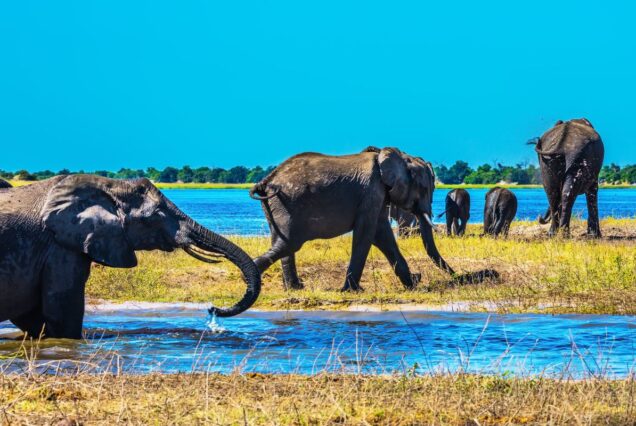
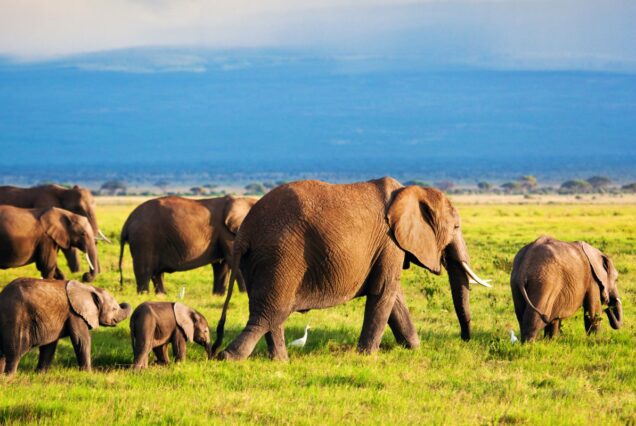
Unstructured time woven throughout—because watching elephants at a waterhole for two unhurried hours beats racing between seven quick sightings.
Included/Excluded
- Luxury lodges and tented camps positioned for wildlife access
- Private Land Cruiser and expert guide throughout
- All game drives, crater fees, park fees, and conservancy fees
- Most meals and premium beverages (specifics in detailed itinerary)
- Flying Doctors insurance (emergency medical evacuation)
- Pre-travel safari design consultation to refine routing and pacing
- Support throughout your journey
- International flights
- International flights to/from Kilimanjaro (Optional)
- Internal flights between regions (recommended for limited time; road travel included otherwise)
- Travel insurance beyond medical evacuation (Optional)
- Optional experiences: balloon safari, Maasai cultural visits, Olduvai Gorge (Optional)
- Private photographic guiding for serious photographers (Optional))
- Gratuities
Tour Plan
You arrive in Arusha—dusty, busy, unlovely, essential. Your accommodation is removed from the chaos: perhaps Rivertrees on the river, or Arusha Coffee Lodge in plantation grounds. Both offer space to decompress before the real journey begins.
Day two is about preparation. Meet your guide over unhurried coffee. Discuss your priorities, your photography goals, your pace preferences. Perhaps visit a local market or cultural heritage center. Mostly, though, it's about adjustment—to altitude, to time zone, to the anticipation of what's coming.
Tonight you'll sleep early. Tomorrow begins properly.
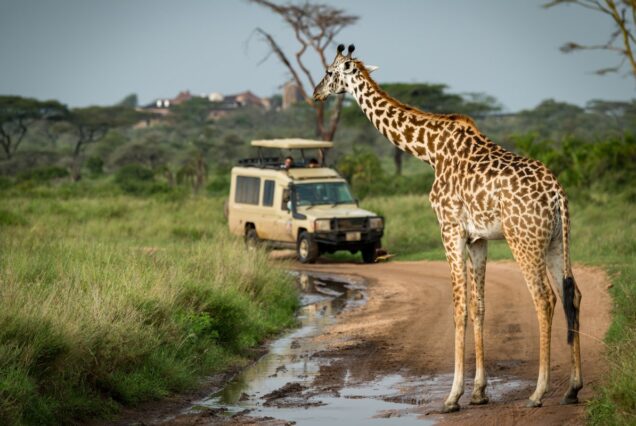
The drive from Arusha takes most of a day, but it's part of the experience: from highland farms through Maasai lands, past Ngorongoro's crater rim, down into the Serengeti plains.
By late afternoon, you've arrived at your first camp. Perhaps &Beyond's Serengeti Under Canvas if it's migration season—mobile camps that move with the herds. Perhaps Singita Sasakwa for contemporary elegance. Perhaps Nomad's Lamai for remote northern reaches.
What matters is this: you're staying four nights minimum. That changes everything.
Night one, you're orienting—where am I, what's possible, how does this work?
Night two, you're engaging—following stories, making choices about where to spend time.
Night three, you're invested—returning to yesterday's leopard's territory, hoping the cubs appear. Requesting the same waterhole at a different time to see how the players shift.
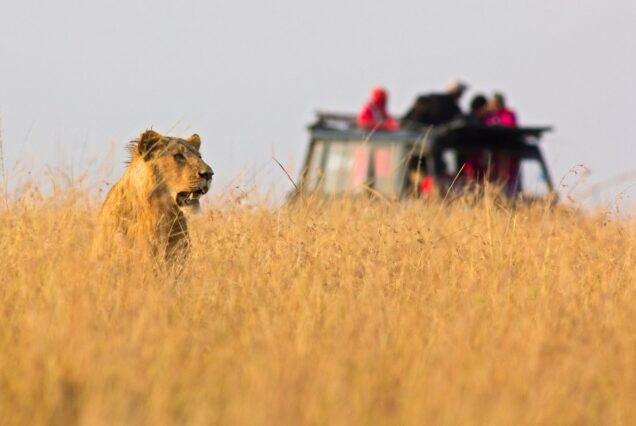
Night four, you've gone deep. You know this section of the Serengeti now—not as tourist, but as temporary resident. You've seen multiple hunts. You understand why that kopje hosts leopards while that one doesn't. You've learned individual animals: that elephant with the broken tusk, that lion with the scarred face.
Your guide has become a trusted interpreter, not just a driver. They know what you've seen and can now show you more complex dynamics. The conversations evolve from "what is that?" to "why is it doing that?"
The days blur beautifully: wake naturally, drive until the light gets harsh, return for brunch and siesta, afternoon at leisure, evening drive catching golden hour, dinner recounting the day's revelations, sleep to the sound of lions calling and hyenas laughing.
Some travelers take an optional balloon safari at dawn—worth it if you want to comprehend the Serengeti's staggering scale from above. Others take a day to visit Olduvai Gorge, understanding human origins before returning to watch our evolutionary cousins hunt.
But mostly, you're just... there. Present. Watching. Learning the land's language.
Leaving the Serengeti feels wrong, but Ngorongoro justifies it.
You'll overnight on the crater rim—perhaps Ngorongoro Crater Lodge for theatrical opulence, or The Highlands for contemporary design, or Entamanu for intimate scale. What matters is the view: that impossible crater sprawling below, mist rising at dawn, one of evolution's most perfect ecosystems contained in a collapsed volcano.
You descend early, before the tour vehicle convoys arrive. Your guide navigates directly to where the game is—they've radioed ahead, they know the crater's morning patterns.
What makes Ngorongoro remarkable isn't just density (though yes, 25,000 large mammals in 100 square miles is absurd). It's the strange Eden quality—high walls containing everything, prey species that never leave, predators with territories measured in meters not miles.
You'll spend two full days here. The first, you're marveling at concentration: flamingos turning the lake pink, rhinos grazing in the open, lion prides so habituated to vehicles they use them as hunting blinds.
The second, you're noticing subtleties: how the crater floor's microclimates create distinct zones. Which hippo pool has which bulls. Where the servals hunt in the swamp margins.
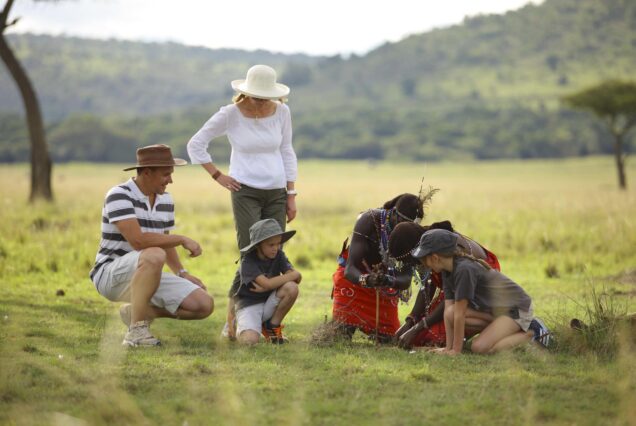
Some travelers add a night at a nearby lodge for cultural immersion—walking with Maasai guides, visiting a genuine boma (not a tourist show), understanding the complex relationship between pastoralists and conservation.
Your final morning in the crater is slower. You've seen enough that you're looking differently now—less frantically, more appreciatively.
The drive back to Arusha allows processing time. Perhaps you night in Arusha again, perhaps you fly directly back to Kilimanjaro. Either way, there's a feeling of gentle landing—back to wifi, to phone calls, to the world you temporarily left.
Tonight you'll sleep in a real bed with solid walls. It feels both right and slightly wrong.
Tomorrow you'll fly home. But Tanzania stays with you—in your photos, yes, but more in your body. In how you learned to be still. In how you practiced patience. In how you waited for the right moment instead of forcing it.
That's the gift of slow safari. Not more sightings, but deeper seeing.
Tanzania's wildlife movements follow predictable seasonal patterns.
The Great Migration moves clockwise through the Serengeti: calving in the southern plains (January-March), western corridor river crossings (June-July), northern Mara River crossings (July-October), then back south.
We'll design your routing around what you most want to witness and when you're traveling. Dry season (June-October) offers easier game viewing but higher prices and crowds. Green season (November-May) brings lush landscapes, dramatic skies, birthing, and far fewer vehicles.
Your ideal Tanzania is waiting. We just need to know when you're coming and what matters most.